
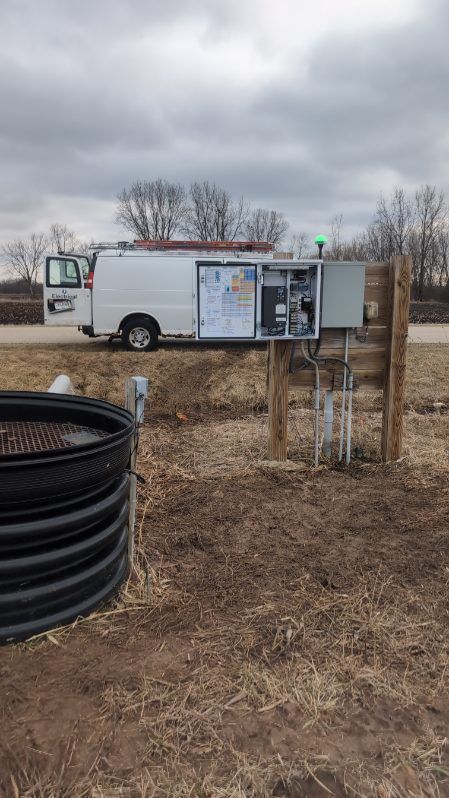
Precision Control for Agricultural Equipment
Motor control systems in Fond du Lac for farms requiring automated and manual operation of grain systems, ventilation, and processing equipment
A control system failure during automated feeding or grain handling stops farm operations until manual workarounds are implemented or repairs are completed, creating labor bottlenecks and timing issues that affect livestock care or crop quality. Motor control systems coordinate the starting, stopping, and speed regulation of equipment ranging from ventilation fans that adjust based on temperature to augers that activate when grain bins reach predetermined levels. Cornerstone Electrical Services, LLC installs and wires motor controls for farm equipment in Fond du Lac, Wisconsin, setting up panels, sensors, and switching logic that allow automated operation while preserving manual override capability. The installation includes running control wiring separate from power circuits to prevent interference, programming or configuring controllers based on operational requirements, and ensuring safety interlocks prevent equipment from operating under unsafe conditions.
Control systems use sensors, timers, and switches to manage motor operation based on conditions like temperature, time of day, or material levels, reducing the need for constant manual oversight while maintaining the ability to intervene when conditions change. Proper installation requires understanding both the electrical requirements of the motors being controlled and the logic that determines when and how those motors should operate.
Schedule a property evaluation to identify control system requirements for your specific equipment and operational needs.
What You Notice Once Control Systems Are Installed
Installing a motor control system begins with mapping the equipment to be controlled, identifying what triggers each motor to start or stop, and determining what safety interlocks are necessary to prevent damage or injury. Control panels are assembled with contactors, relays, and safety devices appropriate to the motors being controlled, and wiring is color-coded and labeled to simplify troubleshooting and future modifications. Sensors are positioned where they accurately measure the conditions they're monitoring, away from sources of false readings like direct sunlight or equipment vibration.
After the system is operational, equipment starts and stops based on actual conditions rather than fixed schedules or manual intervention. Ventilation fans ramp up when barn temperature rises above setpoints and reduce speed when cooling needs decrease, maintaining comfort without wasting energy. Grain handling equipment activates when bins need filling and shuts down automatically when target levels are reached, eliminating the need for constant monitoring. Manual controls remain accessible for situations where automated operation needs to be overridden or disabled for maintenance.
The system includes status indicators that show whether equipment is running, stopped, or experiencing a fault condition, making it immediately clear when intervention is needed. Safety interlocks prevent motors from starting if doors are open, guards are removed, or other unsafe conditions exist. Control wiring is separated from power wiring to prevent electrical noise from causing false signals, and all connections are made in enclosures that protect against dust and moisture common in farm environments.
Motor control installations involve both electrical work and operational planning to create systems that match how your farm actually operates day to day.
Questions Before Starting Your Project
What determines whether a control system should be automated or manual?
Automation makes sense for equipment that operates on predictable schedules or responds to measurable conditions like temperature or time, while manual controls are appropriate for equipment used intermittently or in ways that vary based on changing farm needs. Many systems combine both, with automated operation as the default and manual override available when needed.
How do sensors communicate with motor controls?
Sensors send low-voltage signals to the control panel indicating conditions like temperature, moisture level, or switch position, and the controller interprets those signals to determine whether motors should run. Control wiring is run separately from power wiring and uses shielded cable when necessary to prevent interference from motors or other electrical equipment.
When should motor controls be upgraded rather than repaired?
If existing controls lack the flexibility to accommodate operational changes, require frequent adjustment to maintain proper function, or use obsolete components that are difficult to source for repairs, upgrading to modern controls improves reliability and often adds capabilities like remote monitoring or programmable schedules.
Why is manual override capability important in automated systems?
Equipment occasionally needs to operate outside normal parameters for maintenance, testing, or unusual operational situations, and manual controls allow operators to take direct control without disabling safety features or damaging the automation system. Properly designed systems make manual operation straightforward without requiring electrical knowledge.
What happens if control wiring is damaged or connections fail?
Failed control wiring typically prevents equipment from starting rather than causing unsafe operation, because most systems are designed to require active signals to run rather than defaulting to the on position. Control panels should be installed in locations protected from physical damage, and connections should be made with terminal blocks or connectors that can be inspected and tightened during routine maintenance.
Cornerstone Electrical Services, LLC has experience with motor control applications across a range of farm operations in the Fond du Lac area. Reach out to discuss your control system needs and explore options for improving equipment efficiency and reducing manual oversight.