
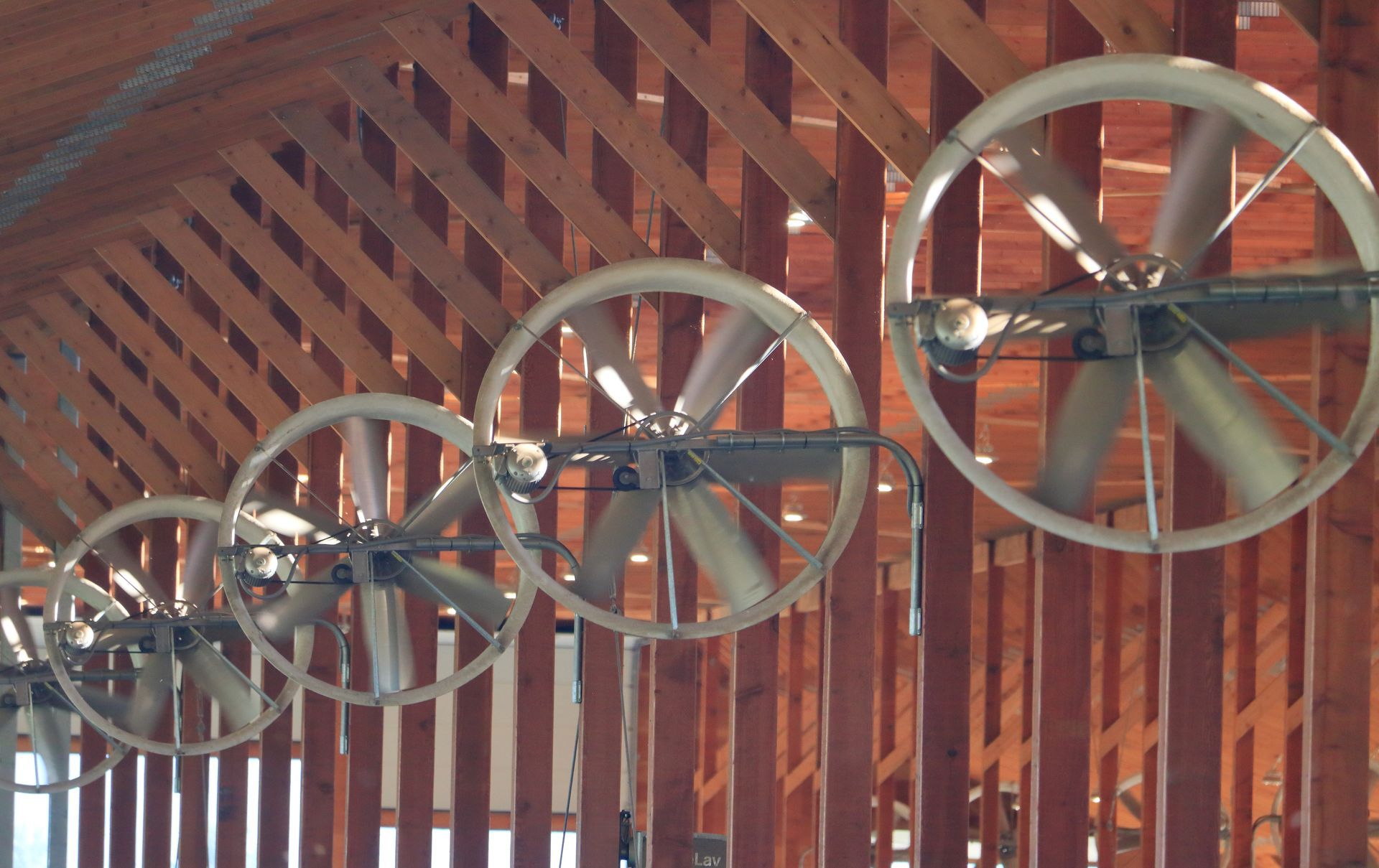
Airflow Systems That Reduce Heat Stress
Barn fan and ventilation systems in Fond du Lac for livestock facilities managing air quality and temperature control
Heat stress in dairy barns reduces milk production and increases health issues, particularly during Wisconsin's humid summer months when barn temperatures can exceed safe ranges even with open doors. Cornerstone Electrical Services, LLC installs ventilation systems that move air continuously through livestock spaces, supporting the fans, controllers, and circulation equipment that manage temperature and humidity. The electrical work involves running dedicated circuits to each fan zone, installing controllers that adjust fan speed based on temperature sensors, and ensuring the system can operate at full capacity during peak heat without overloading the barn's electrical service.
Ventilation systems rely on multiple fan types working together: exhaust fans that pull stale air out of the barn, circulation fans that move air across resting areas, and intake shutters or baffles that control fresh air entry points. Each fan requires properly sized wiring to handle startup current, which can be significantly higher than running current, and placement must account for airflow patterns that prevent dead zones where heat and humidity accumulate.
Request a detailed estimate based on your current barn ventilation needs and building configuration.
What Changes After Ventilation Installation Completes
Installing a ventilation system begins with mapping the barn to identify where air needs to enter, circulate, and exit based on stall layout and prevailing wind direction. Circuits are run to each fan location using wire sized for the motor's full load amp rating plus a safety margin, and controllers are mounted in locations protected from moisture but accessible for seasonal adjustments. Temperature sensors are positioned in representative zones, not near doors or direct sunlight where readings would be inaccurate.
Once the system is running, you'll notice air movement throughout the barn rather than pockets of still, hot air near the ceiling or at the far end of stall rows. Livestock spend less time standing and more time resting comfortably, and condensation on walls or beams decreases because moisture is exhausted before it accumulates. The system maintains airflow even when multiple fans are operating simultaneously, without voltage sag that would slow motors or reduce cooling effectiveness.
The installation includes variable speed controllers where appropriate, allowing fan output to match actual temperature conditions rather than running at full speed constantly. Wiring is protected in areas where equipment or animals could contact it, and connections are made in weatherproof boxes that prevent corrosion from barn humidity. Each fan circuit is labeled at the panel for troubleshooting during system adjustments or seasonal maintenance.
Ventilation system performance depends on proper electrical setup and understanding how barn conditions affect equipment operation throughout the year.
Common Questions About This Service
What electrical capacity is required for a full barn ventilation system?
The total load depends on the number of fans, their horsepower ratings, and whether they'll run simultaneously during peak heat. A typical dairy barn may require 30 to 60 amps of dedicated capacity for ventilation alone, separate from lighting and other equipment circuits.
How do controllers adjust fan speed based on temperature?
Variable frequency drives or multi-speed motor controls receive input from temperature sensors and adjust fan output accordingly. When barn temperature is moderate, fans run at lower speeds to maintain airflow while reducing energy use; as temperature rises, the system ramps up to full capacity automatically.
When is the best time to install or upgrade ventilation systems?
Installations are often scheduled during cooler months before heat stress becomes an issue, allowing time to test the system and make adjustments before summer. This timing also avoids working in a hot barn and allows any construction disruption to occur when temperature control is less critical.
Why do some fans fail to provide adequate cooling even when running?
Undersized wire creates voltage drop that reduces motor speed and airflow output, and poor placement creates circulation patterns that miss key resting areas. Effective ventilation requires both proper electrical supply and strategic fan positioning based on barn layout and airflow analysis.
What maintenance does the electrical portion of the system require?
Connections should be inspected annually for corrosion or loosening caused by vibration, and controllers should be checked to confirm temperature sensors are reading accurately. Fond du Lac's freeze-thaw cycles can affect outdoor components, so weatherproofing should be verified before each cooling season.
Cornerstone Electrical Services, LLC has experience with farm-specific ventilation requirements across the Fond du Lac area. Contact our office to schedule ventilation system installation or upgrades tailored to your barn's layout.